

Key Takeaways
Lifespan Fitness
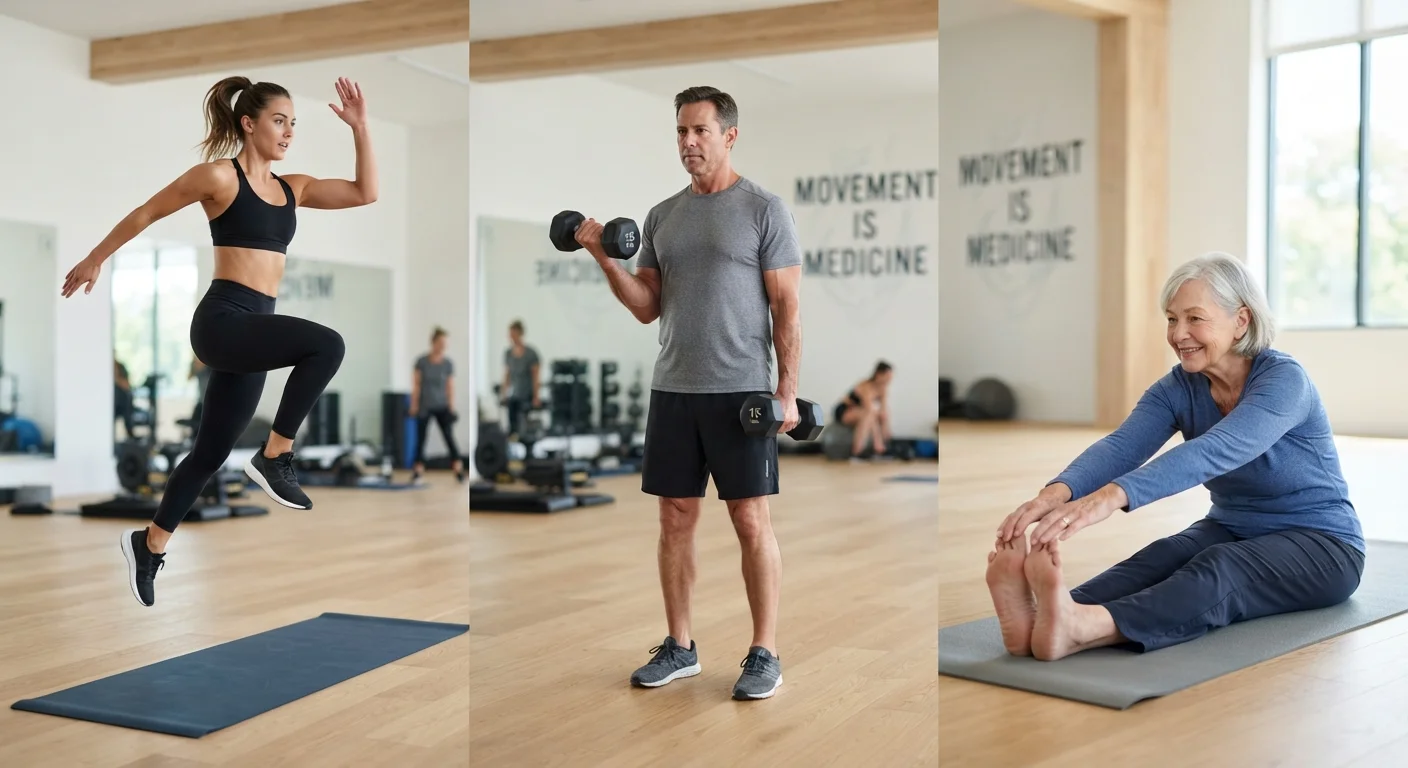
Lifespan fitness refers to the idea that exercise needs, training priorities, and safe intensity levels change meaningfully as the human body ages. What builds strength and endurance effectively in your 20s may need to be adjusted in your 40s, 50s, or beyond. Matching workout types to your current life stage helps maximize benefit while reducing injury risk.
Exercise physiologists recognize that age-related changes in muscle fiber composition, hormonal output, bone density, and recovery capacity all influence how the body responds to different training stimuli.
Your 20s: Building the Foundation
The early adult years represent a window of high physical adaptability. Muscle tissue responds efficiently to training stimulus, hormones like testosterone and estrogen support recovery, and bone density is still increasing - reaching its peak typically around age 30. This makes the 20s an ideal time to establish a broad fitness base.
For most people in this decade, a balanced mix of strength training, cardiovascular work, and mobility exercises provides the best long-term investment. The American College of Sports Medicine (ACSM) recommends adults engage in at least 150 minutes of moderate-intensity aerobic activity per week, alongside muscle-strengthening activities on two or more days.
Higher training volumes and shorter recovery windows are generally sustainable here - but that doesn't mean going all-out without structure. Learning proper movement patterns in the 20s reduces injury risk for decades ahead. See our guide to mixing workout types for ideas on building variety into a routine from day one.
Start Strength Training Early
Even if your primary fitness goal is cardiovascular endurance or weight management, adding two resistance training sessions per week in your 20s builds a muscular foundation that pays dividends for decades. Bodyweight exercises, free weights, and resistance bands all count. Focus on learning movement quality before chasing heavy loads.
Your 30s and 40s: Protecting What You've Built
By the mid-30s, the body's rate of muscle protein synthesis begins to slow slightly, and recovery between hard sessions takes a bit longer. This doesn't mean fitness declines - but it does mean training smarter becomes more important than training harder.
Resistance training takes on new significance in this decade. Sarcopenia - the gradual loss of skeletal muscle mass - can begin as early as age 30, progressing at roughly 3-8% per decade without intervention. Regular strength work is one of the most evidence-supported ways to counteract this trend.
Hormonal changes in the 40s - including declining estrogen in women and gradually reducing testosterone in men - can also affect bone density and body composition. Weight-bearing exercises, including both resistance training and impact activities like brisk walking, help maintain skeletal health. Our companion article on men's physical health across the decades explores these hormonal shifts in greater detail.
3-8%
Muscle mass lost per decade after age 30
Research published in exercise physiology literature indicates this rate accelerates further after age 60 without regular resistance training.
~1% per year
Bone density decline rate after peak mass
The National Institutes of Health notes that bone density typically peaks around age 30 and gradually declines, with accelerated loss occurring around menopause in women.
150+ min/week
Recommended moderate aerobic activity for adults
The American College of Sports Medicine and the CDC both recommend at least 150 minutes of moderate-intensity aerobic activity weekly for healthy adults of all ages.
Your 50s and Beyond: Shifting Priorities Toward Function
From the 50s onward, training priorities shift noticeably toward functional fitness - the capacity to move well, maintain balance, and stay independent. Muscle mass and bone density continue to decline without intervention, and fall-related injuries become a genuine health concern.
Balance and stability training, often overlooked in earlier decades, become central at this stage. Exercises that challenge the body's proprioception - its sense of position in space - directly reduce fall risk. This is relevant not just for older adults, but as a habit worth building earlier. Our article on balance and stability work makes the case for starting this practice before it feels urgent.
Flexibility and joint mobility also deserve dedicated attention. Yoga, stretching routines, and low-impact formats like swimming or water aerobics can maintain range of motion and manage joint discomfort without excessive loading. Cardiovascular health remains essential - walking, cycling, and light resistance circuits all support heart function effectively at lower intensities.
For a broader look at how wellness practices evolve across the full lifespan, the wellness across life stages overview offers helpful context beyond fitness alone.
Adapting Your Training: Principles That Apply at Every Age
Regardless of decade, a few principles remain constant. Progressive overload - gradually increasing challenge over time - drives improvement whether you're 22 or 72. Consistency outperforms intensity in the long run; shorter, sustainable sessions done regularly yield more than sporadic intense workouts.
Recovery also scales with age. Older adults generally need more time between hard sessions, and sleep quality directly affects how well the body repairs and adapts. Nutrition plays an equally important role - adequate protein intake is particularly important for preserving muscle mass in midlife and beyond. The nutritional shifts across the decades resource explores this in practical terms.
Special Populations Require Extra Care
Individuals who are pregnant, managing chronic conditions such as osteoporosis or cardiovascular disease, or returning from injury should not rely on general age-based guidelines alone. Exercise recommendations for these groups require personalized input from a physician, physical therapist, or certified exercise specialist with relevant clinical experience.
This article is for general informational purposes only and does not constitute medical advice. Always consult a qualified healthcare professional before starting, changing, or significantly intensifying an exercise program, especially if you have existing health conditions or concerns.