

Key Takeaways
Reduces risk of falls and everyday injuries
Research published in sports medicine literature consistently links improved proprioception to lower rates of ankle sprains, knee injuries, and fall-related harm. Training your neuromuscular system to react quickly is one of the most practical injury-prevention tools available.
Strengthens stabilizing muscles often neglected
Muscles like the peroneals around the ankle, the rotator cuff at the shoulder, and deep spinal stabilizers rarely get enough stimulus from conventional exercises. Balance drills specifically target these structures, filling a real gap.
Improves performance in other types of exercise
Better body control translates directly to safer, more effective strength training. A lifter with strong stabilizers can maintain proper form under load, reducing compensation patterns that lead to overuse injuries.
Requires minimal equipment and space
Most foundational balance exercises - single-leg stands, tandem walking, lateral shuffles - need only your bodyweight and a small clear area. This makes them accessible at home, at the gym, or even during a work break.
Supports healthy aging and long-term independence
Decline in proprioception is a natural part of aging, but it's trainable. Establishing balance habits earlier in life builds a reserve that supports functional independence well into later decades.
Limited cardiovascular or hypertrophy stimulus
Balance exercises generally don't elevate heart rate enough to meaningfully improve cardiovascular fitness, nor do they provide the progressive overload needed to build significant muscle mass. They should complement - not replace - cardio and strength training.
Progress can be slow and hard to measure
Unlike lifting heavier weights or running faster, stability improvements are subtle and don't translate into easily trackable numbers. Beginners may find it hard to gauge whether they're actually improving, which can affect motivation.
Can feel tedious without structure or variety
Holding a single-leg balance for repetitions is not inherently exciting, and without a structured progression plan, many people abandon balance work before seeing its benefits. Pairing it with other training formats tends to improve adherence.
Risk of overcomplicating beginner routines
Introducing balance boards, wobble cushions, or complex proprioceptive drills too early can overwhelm beginners and detract from building fundamental movement patterns. Starting simple - standing on one leg - is almost always the better entry point.
Our Verdict
Balance and stability training offers genuine, research-supported benefits for body control, injury prevention, and functional movement that most other training styles don't fully address. Its main limitation is that it rarely stands alone as a complete fitness solution - it works best as a complement to strength, cardio, and flexibility work. The time investment is low and the barrier to entry is minimal, making it one of the easiest additions to an existing routine.
Anyone looking to move more safely and efficiently - whether you're a beginner building a foundation, an active adult wanting to stay injury-free, or someone returning to exercise after a break.
What Balance and Stability Training Actually Is
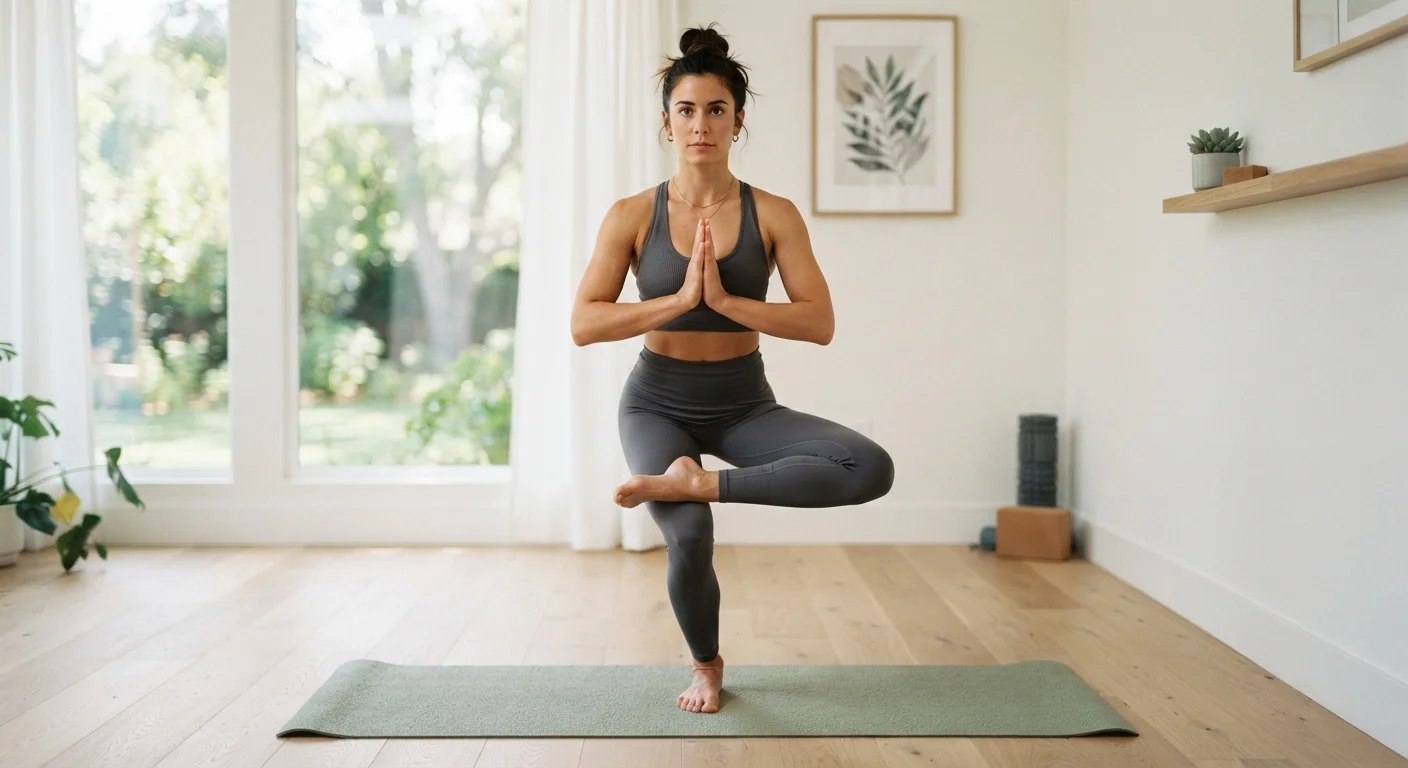
Balance and stability training refers to exercises that challenge your body's ability to maintain controlled posture and alignment during movement. Where traditional strength training often isolates large muscle groups through predictable ranges of motion, stability work recruits the smaller, deeper muscles - particularly around the ankles, knees, hips, and core - that keep joints steady when your environment is less predictable.
Examples range from simple single-leg stands to more dynamic movements like lateral lunges on an uneven surface or core-bracing exercises on unstable ground. The common thread is that your nervous system, not just your muscles, is being trained to respond quickly and accurately. This type of training is sometimes called proprioceptive training - proprioception being your body's sense of where it is in space.
To understand how balance fits within the broader landscape of exercise, see the major exercise categories and what each one does.
The Advantages of Adding Balance Work
Including even a small amount of stability training in your weekly schedule can pay dividends across several dimensions of fitness.
Reduces risk of falls and everyday injuries
Research published in sports medicine literature consistently links improved proprioception to lower rates of ankle sprains, knee injuries, and fall-related harm. Training your neuromuscular system to react quickly is one of the most practical injury-prevention tools available.
Strengthens stabilizing muscles often neglected
Muscles like the peroneals around the ankle, the rotator cuff at the shoulder, and deep spinal stabilizers rarely get enough stimulus from conventional exercises. Balance drills specifically target these structures, filling a real gap.
Improves performance in other types of exercise
Better body control translates directly to safer, more effective strength training. A lifter with strong stabilizers can maintain proper form under load, reducing compensation patterns that lead to overuse injuries.
Requires minimal equipment and space
Most foundational balance exercises - single-leg stands, tandem walking, lateral shuffles - need only your bodyweight and a small clear area. This makes them accessible at home, at the gym, or even during a work break.
Supports healthy aging and long-term independence
Decline in proprioception is a natural part of aging, but it's trainable. Establishing balance habits earlier in life builds a reserve that supports functional independence well into later decades.
~25%
Reduction in ankle sprain recurrence
A systematic review in the British Journal of Sports Medicine found that balance and proprioception training programs reduced ankle sprain recurrence rates by approximately 25% in athletic populations.
30-50%
Decline in proprioception with age (without training)
Exercise physiology research indicates that proprioceptive sensitivity can decline substantially between early adulthood and older age, underscoring the value of maintaining balance training across the lifespan.
Because most balance exercises require only your bodyweight, they integrate easily into existing routines without extra cost or space. If you're still figuring out how to structure your schedule, building a routine you can realistically stick to is a helpful starting point before layering in new modalities.
The Limitations Worth Knowing
Balance training is genuinely useful, but it isn't without drawbacks - especially when expectations aren't properly set.
Limited cardiovascular or hypertrophy stimulus
Balance exercises generally don't elevate heart rate enough to meaningfully improve cardiovascular fitness, nor do they provide the progressive overload needed to build significant muscle mass. They should complement - not replace - cardio and strength training.
Progress can be slow and hard to measure
Unlike lifting heavier weights or running faster, stability improvements are subtle and don't translate into easily trackable numbers. Beginners may find it hard to gauge whether they're actually improving, which can affect motivation.
Can feel tedious without structure or variety
Holding a single-leg balance for repetitions is not inherently exciting, and without a structured progression plan, many people abandon balance work before seeing its benefits. Pairing it with other training formats tends to improve adherence.
Risk of overcomplicating beginner routines
Introducing balance boards, wobble cushions, or complex proprioceptive drills too early can overwhelm beginners and detract from building fundamental movement patterns. Starting simple - standing on one leg - is almost always the better entry point.
Balance Training Is a Complement, Not a Cure-All
Stability exercises address a real and often overlooked component of fitness, but they work best as part of a varied routine. The American College of Sports Medicine (ACSM) recommends that complete fitness programs include cardiovascular, strength, flexibility, and neuromotor (balance) training. Skewing too heavily toward any single category - including balance - typically produces less well-rounded results than an integrated approach.
If your goal is overall fitness rather than isolated skill development, mixing workout types is generally the more effective approach than relying heavily on any single modality.
Who Benefits Most - and When to Be Cautious
While balance training is often associated with fall prevention in older adults, its benefits extend well beyond that demographic. Athletes use it to reduce sport-related injury risk. Office workers use it to counteract the postural effects of prolonged sitting. Beginners use it to develop the body awareness needed to perform strength exercises safely.
That said, fitness needs do shift across life stages. How exercise needs shift with age explores this in depth - balance training tends to become progressively more important as we get older, but building that foundation early is a clear advantage.
If you have a history of joint injuries, vestibular conditions, or neurological issues, consult a qualified healthcare professional before starting a balance training program. This article provides general fitness information and is not a substitute for personalized medical advice.