

Key Takeaways
Why Rest Days Belong in Every Training Plan
Many beginners treat rest days as something to earn rather than something to plan. In reality, rest is the phase during which training adaptations - stronger muscles, improved cardiovascular efficiency, better coordination - actually take hold. Without adequate recovery, the body cannot complete the repair cycle that exercise initiates.
Exercise physiologists describe this process through the principle of supercompensation: the body is stressed by a workout, recovers to its previous baseline, then adapts slightly above that baseline - provided sufficient rest occurs between sessions. Skipping rest compresses this cycle and prevents the upward adaptation that produces fitness gains.
Rest Is When Fitness Actually Happens
Exercise creates microscopic stress on muscle tissue. The body repairs and strengthens that tissue during rest - not during the workout itself. Skipping rest days does not accelerate results; it interrupts the adaptation process and increases the likelihood of overuse injuries. If you experience persistent pain, unusual fatigue, or declining performance, consult a qualified healthcare professional before continuing training.
Beyond muscle repair, rest also supports hormonal balance, immune function, and mental focus. Sleep - the most powerful recovery tool available - is when growth hormone is released and tissue rebuilding accelerates. Consistent training without consistent rest gradually erodes all of these systems.
Well-rounded recovery also pairs with other lifestyle habits. A nourishing diet, for instance, directly supports muscle repair - see Building an Eating Routine That Survives a Busy Week for practical guidance on fueling your week consistently.
How to Build Your Schedule Step by Step
The steps below walk you through building a realistic weekly training plan that deliberately includes rest. You will need about 15-30 minutes and the tools listed below.
What you will need
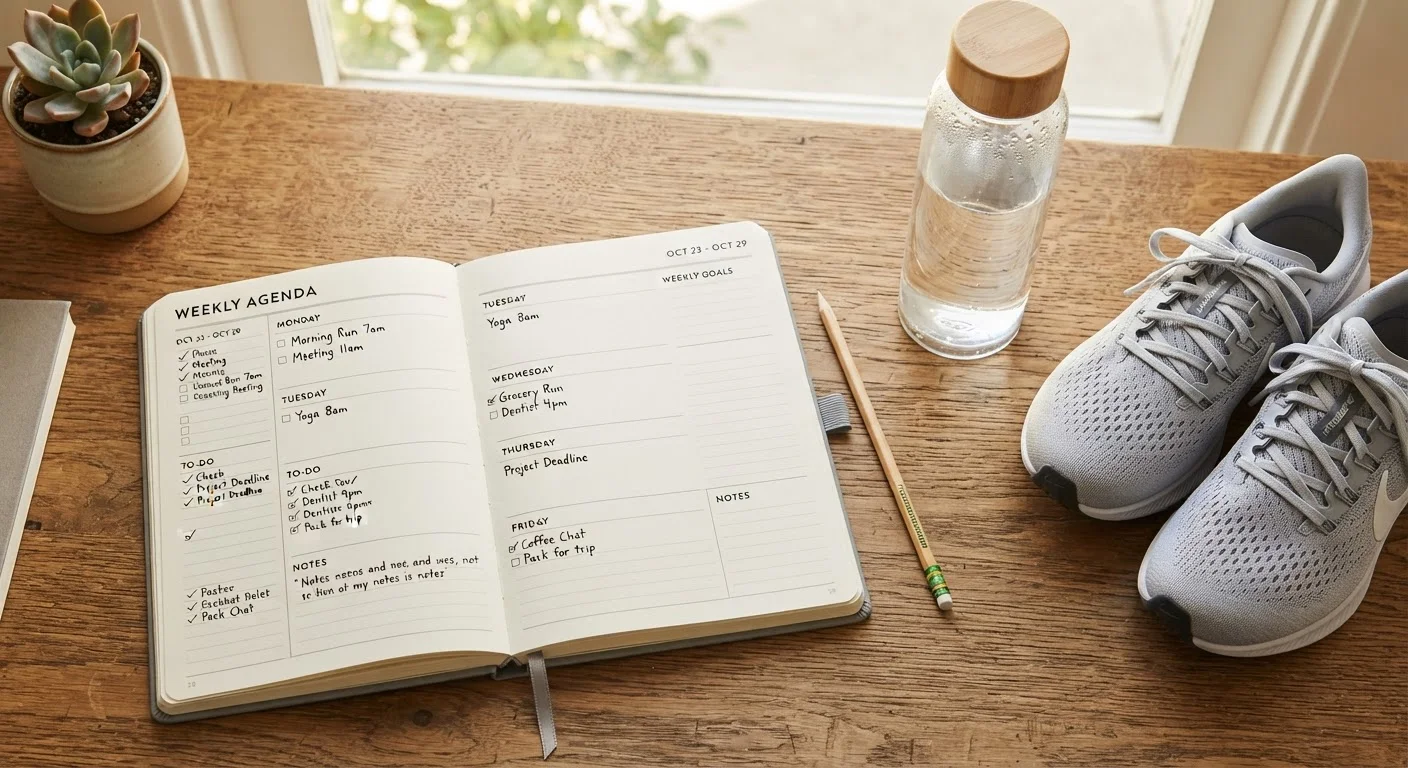
Weekly calendar or planner
Used to map out training days and rest days visually so you can spot imbalances at a glance.
Training log or journal
Helps you track how your body responds to the schedule over time, flagging fatigue or soreness patterns.
Rate of Perceived Exertion (RPE) scale
A simple 1-10 scale used to gauge workout intensity and ensure rest days are genuinely easy.
Audit your current activity level
Before building anything new, get an honest picture of what you are currently doing. Write down every physical activity from the past week - workouts, walks, sports, physical labor. Note how each session felt (easy, moderate, hard) and how you felt the following day.
This audit reveals whether you are already overreaching, under-recovering, or have room to add training. It also surfaces patterns, such as always feeling drained on Thursdays, that should inform where rest days go.
Identify your hard, moderate, and easy training days
Sort your planned sessions into three tiers by intensity. Hard days might include strength training, HIIT (high-intensity interval training), or long runs. Moderate days include brisk walking, light cycling, or a beginner yoga flow. Easy days are gentle movement or full rest.
Most beginners do well with two to three hard days per week. The remaining days should be moderate, easy, or complete rest - a ratio supported by general guidance from the American College of Sports Medicine (ACSM).
Place rest days strategically around hard sessions
Open your weekly calendar and place your hard sessions first, with at least one easier or rest day between them. For example: hard on Monday, rest or easy on Tuesday, hard on Wednesday, easy on Thursday, hard on Friday, rest on Saturday and Sunday.
Avoid scheduling hard days on consecutive days whenever possible. If life requires it occasionally, ensure the second session targets a different muscle group - for instance, upper-body strength followed by a lower-body-focused session.
Define what each rest day will look like
Ambiguity kills consistency. For each rest day in your schedule, decide in advance whether it will be a full rest day (no structured exercise) or an active recovery day (gentle movement at RPE 3 or below). Write this in your planner just as you would a workout.
Having a defined plan prevents rest days from accidentally becoming extra training sessions - a common pattern when motivated beginners feel guilty about not moving.
Review and adjust the schedule after one week
After completing your first full week, review your training log. Ask: Did I feel rested going into hard sessions? Did soreness linger beyond 48 hours? Did I skip any days - and if so, why?
Use this information to shift rest days if needed. Recovery needs change as fitness improves, so treat the schedule as a living document rather than a fixed rule. For a more detailed week-by-week progression, see Your First Rest Day Plan.
Use Active Recovery, Not Just Inactivity
A rest day does not have to mean sitting still all day. Light movement - a 20-minute walk, gentle yoga, or easy cycling - promotes blood flow to recovering muscles without adding training stress. This approach, often called active recovery, can reduce next-day soreness and keep your routine feeling sustainable.
Don't Stack Hard Days Back-to-Back
Placing two or more high-intensity sessions consecutively - without a rest or light day in between - is one of the most common beginner mistakes. Doing so prevents adequate muscle repair and raises cortisol levels, which can impair both performance and sleep. Space your most demanding workouts across the week with easier days or full rest between them.
Once your schedule is running smoothly, consider layering in a short mindfulness or stress-management habit on rest days - Building a Short Daily Mindfulness Routine offers a structured, beginner-friendly approach that fits around any timetable.
This article is for general informational and educational purposes only and is not a substitute for professional medical or fitness advice. Always consult a qualified healthcare provider before beginning a new exercise program, particularly if you have an existing health condition, injury, or are in a special population group such as pregnancy, older adulthood, or childhood.