

Key Takeaways
Start here
What Is Fertility, Really?
Next
The Menstrual Cycle and Ovulation Explained
Then
Your Fertile Window: When Conception Is Possible
Go deeper
Key Factors That Influence Fertility
When you're ready
When to Talk to a Healthcare Provider
What Is Fertility, Really?
Fertility is simply your body's capacity to achieve a pregnancy. It isn't a fixed switch — on or off — but rather a spectrum shaped by a mix of biological, hormonal, and lifestyle factors that can shift across your lifetime.
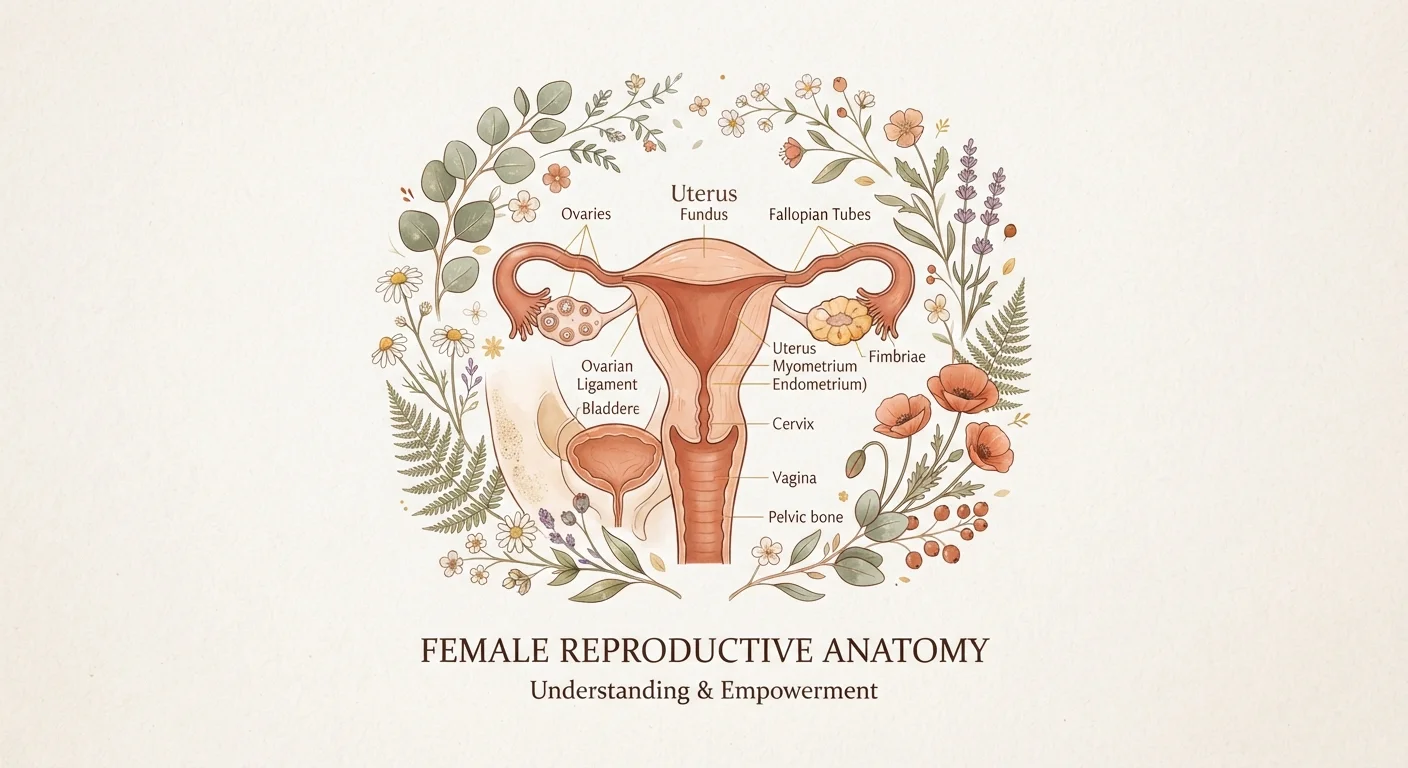
For women and people with ovaries, fertility centers on the monthly release of a mature egg, a process driven by a carefully orchestrated sequence of hormones. Understanding these basics puts you in a much stronger position to care for your reproductive health — whether you're planning to conceive now, later, or simply want to understand your body better.
For a plain-English reference to the terms you'll encounter along the way, the Reproductive Wellness Glossary is a helpful companion to this guide.
Ovulation
The monthly release of a mature egg from one of the ovaries. This is the moment when conception becomes biologically possible.
Fertile window
The period in each cycle — roughly five to six days — during which unprotected sex could result in pregnancy, ending around the time of ovulation.
Ovarian reserve
The quantity and quality of eggs remaining in the ovaries. Reserve naturally decreases with age and can be estimated through specific hormone blood tests.
Luteinizing hormone (LH)
A hormone released by the pituitary gland that triggers ovulation. Ovulation predictor kits detect the surge in LH that occurs 24–36 hours before an egg is released.
Corpus luteum
The structure left behind in the ovary after an egg is released. It produces progesterone to prepare the uterine lining for a potential pregnancy.
Basal body temperature (BBT)
Your body's lowest resting temperature, measured first thing in the morning. It rises slightly after ovulation, making it a useful — though retrospective — sign that ovulation has occurred.
The Menstrual Cycle and Ovulation Explained
The menstrual cycle is the monthly process that prepares the body for a potential pregnancy. A typical cycle lasts between 21 and 35 days, though variation is normal. It unfolds in two main phases:
- Follicular phase: Starting on day one of your period, the pituitary gland releases follicle-stimulating hormone (FSH), which prompts several follicles in the ovaries to develop. One follicle becomes dominant and produces increasing levels of estrogen, thickening the uterine lining.
- Luteal phase: After ovulation, the empty follicle transforms into the corpus luteum, which produces progesterone to maintain the uterine lining. If fertilization doesn't occur, progesterone falls, triggering menstruation.
Ovulation — the release of a mature egg from the dominant follicle — occurs roughly midway through the cycle, triggered by a surge in luteinizing hormone (LH). The egg survives for approximately 12 to 24 hours. For a deeper look at how hormones orchestrate this process, see Key Terms in Hormonal Health.
Your Fertile Window: When Conception Is Possible
Because sperm can survive in the reproductive tract for up to five days, the fertile window — the time during which unprotected sex can result in pregnancy — spans roughly five to six days per cycle. This window closes around ovulation day.
The challenge is that ovulation doesn't happen on a perfectly predictable schedule, even in people with regular cycles. Cycle length can shift due to illness, stress, travel, or other variables.
Start Simple With Cycle Tracking
Before investing in ovulation kits or apps, try simply noting the first day of each period for two to three months. This gives you a baseline cycle length and helps you estimate when ovulation is likely to occur. Many free period-tracking apps can help you log this data consistently.
Common ways to identify your fertile window include:
- Basal body temperature (BBT) tracking: Your resting temperature rises slightly after ovulation. Charting this over months reveals a pattern.
- Cervical mucus observation: Around ovulation, mucus typically becomes clear, slippery, and stretchy — often compared to raw egg whites.
- Ovulation predictor kits (OPKs): These detect the LH surge in urine, usually 24–36 hours before ovulation occurs.
No single method is perfectly precise for everyone. Using a combination — alongside consistent cycle tracking — tends to give the clearest picture.
Key Factors That Influence Fertility
Reproductive potential is shaped by more than just cycle regularity. Several interconnected factors play a role:
- Age
- Ovarian reserve — the quantity and quality of eggs — naturally declines with age, particularly after the mid-30s. This is one of the most significant biological influences on fertility.
- Hormonal balance
- Conditions that disrupt hormonal signaling, such as polycystic ovary syndrome (PCOS) or thyroid disorders, can interfere with ovulation and cycle regularity.
- Nutrition and body weight
- Both significant underweight and overweight can affect hormonal function and ovulation. A balanced, nutrient-rich diet supports overall reproductive health — for foundational guidance, see Nutrition from First Principles.
- Lifestyle factors
- Smoking is associated with reduced ovarian reserve. Heavy alcohol use and extreme exercise patterns may also affect cycle regularity. Chronic stress can disrupt the hormonal axis that controls ovulation.
- Reproductive anatomy
- Conditions such as endometriosis, uterine fibroids, or blocked fallopian tubes can affect conception, sometimes without obvious symptoms.
Symptoms Can Be Silent
Several conditions that affect fertility — including endometriosis and some hormonal imbalances — may cause no obvious symptoms in their early stages. If something feels off about your cycle, or if you have a family history of reproductive conditions, it's worth raising with a healthcare provider rather than waiting for a more obvious sign.
When to Talk to a Healthcare Provider
Learning the basics of fertility is empowering — but it's the starting point, not a substitute for personalized medical guidance. A healthcare provider can evaluate your individual situation through cycle history, hormone testing, imaging, and other clinical tools that no self-tracking method can replicate.
As a general guideline, most reproductive specialists recommend seeking evaluation:
- After 12 months of trying to conceive without success if you are under 35
- After 6 months if you are 35 or older
- Sooner if you have irregular or absent periods, a known reproductive condition, a history of pelvic infections, or other health concerns
Fertility Affects Partners Too
Fertility is not solely a women's health issue. In couples experiencing difficulty conceiving, contributing factors are found across partners in a significant proportion of cases. A thorough evaluation generally involves assessment of all partners involved.
If you're not yet trying to conceive but want to understand your reproductive health, a preconception appointment with a provider is a proactive and worthwhile step — there's no need to wait until you're actively trying.
This article is for general informational purposes only and does not constitute medical advice. Please consult a qualified healthcare professional for guidance specific to your health and circumstances.