

Key Takeaways
HPA Axis
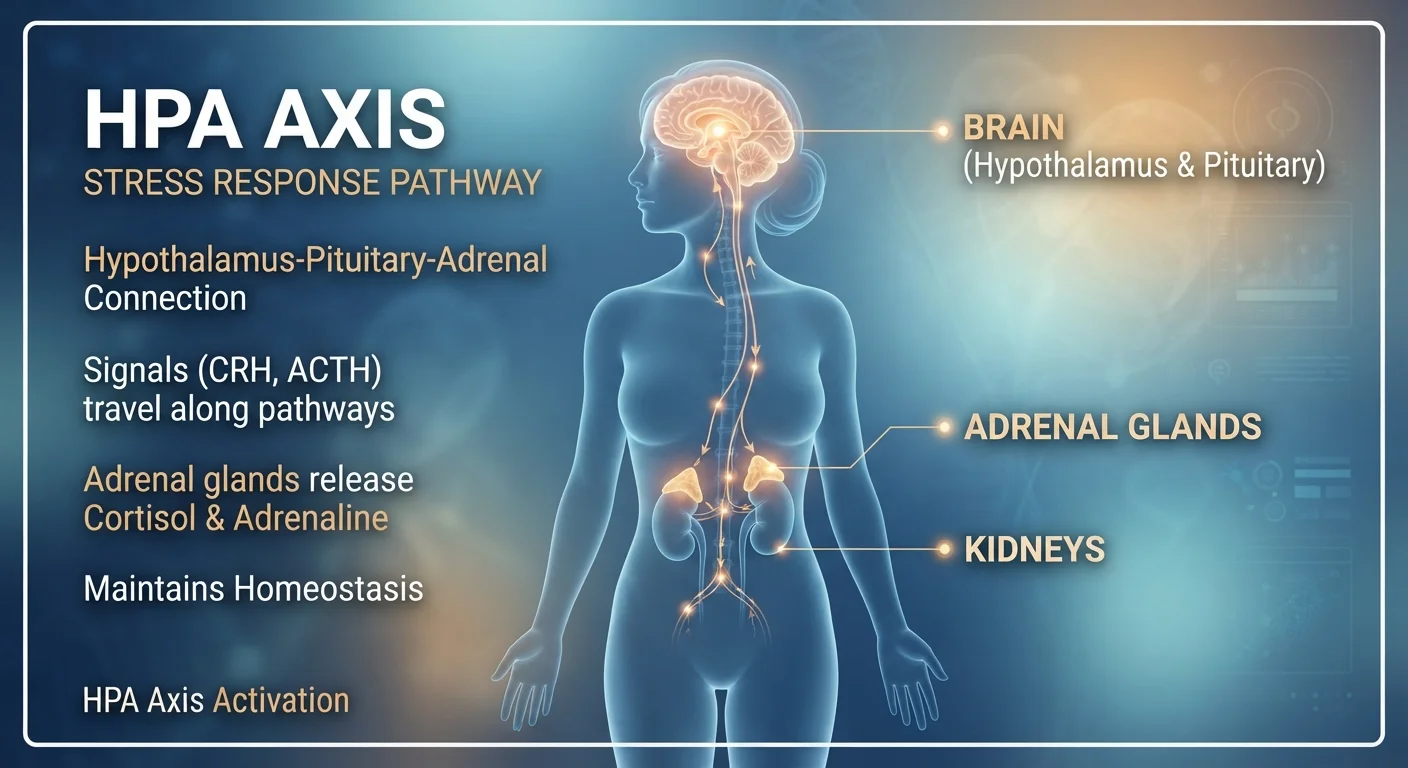
The HPA axis — short for Hypothalamic-Pituitary-Adrenal axis — is a communication network linking three key parts of your body: a small region of your brain called the hypothalamus, the pituitary gland just below it, and the adrenal glands that sit atop your kidneys. Together, they coordinate your body's response to stress by releasing and regulating hormones, particularly cortisol. Think of it as your body's built-in alarm and recovery system.
The HPA axis operates via a negative feedback loop — rising cortisol signals the hypothalamus and pituitary to slow production, maintaining hormonal balance under normal conditions.
How the HPA Axis Works
When you perceive something stressful — a looming deadline, a frightening news headline, a tense conversation — your hypothalamus fires first. It releases a hormone called CRH (corticotropin-releasing hormone), which travels a short distance to the pituitary gland. The pituitary responds by releasing ACTH (adrenocorticotropic hormone) into the bloodstream. ACTH then reaches the adrenal glands, which release cortisol.
Cortisol is often called the stress hormone, but it plays many vital roles: regulating blood sugar, managing inflammation, influencing immune function, and helping you stay alert. In the short term, this cascade is protective and entirely normal. To learn more about how this stress response feels in your body, see how your body reacts to stress and anxiety.
Once the stressor passes, rising cortisol feeds back to the hypothalamus and pituitary, signaling them to reduce CRH and ACTH. This negative feedback loop returns your system to baseline — a state scientists call allostasis.
The HPA Axis Is Not Always the Villain
It is easy to think of cortisol as purely harmful, but the HPA axis is an essential, life-preserving system. Without it, your body could not mount an immune response, regulate blood sugar, or wake you in the morning. The goal is not to eliminate cortisol — it is to support the system's ability to activate appropriately and then fully recover.
What Happens When Stress Becomes Chronic
The HPA axis is designed for short, sharp bursts of activation — not months of sustained pressure. When stress is ongoing, the feedback loop struggles to reset. Cortisol levels stay elevated longer than they should, and over time, the system can become dysregulated.
Understanding the difference between short-term and long-term stress is important here. Acute and chronic stress affect the body in very different ways, and the HPA axis responds differently to each.
Chronically high cortisol can:
- Suppress the hormones that regulate your menstrual cycle (LH, FSH, and estrogen)
- Interfere with thyroid function
- Impair immune responses, making you more susceptible to illness
- Disrupt blood sugar regulation
- Affect mood, concentration, and memory
Eventually, after prolonged dysregulation, cortisol output may actually decrease — leaving you feeling exhausted and flat, rather than wired and anxious.
~75%
Adults reporting physical stress symptoms
According to the American Psychological Association's Stress in America surveys, a substantial majority of adults report experiencing physical symptoms they associate with stress, including fatigue and headaches.
Up to 40%
Women with stress-related cycle disruption
Research published in reproductive health literature suggests that a significant proportion of women with unexplained menstrual irregularities show markers of HPA axis dysregulation or elevated psychological stress.
The Hormonal Ripple Effect on Women's Health
Women's hormonal systems are particularly sensitive to HPA axis disruption because cortisol and reproductive hormones share overlapping pathways. When cortisol is chronically elevated, the body effectively signals that survival takes priority over reproduction.
This can result in irregular or missed periods, more intense PMS symptoms, reduced fertility, and worsened perimenopausal symptoms. During perimenopause, when the hormonal landscape is already shifting, an overactive HPA axis can amplify hot flashes, sleep disruption, and mood changes.
“The brain does not distinguish well between psychological and physical threats. Whether the danger is a predator or a difficult email, the HPA axis responds in much the same way — and when that response never fully turns off, the downstream effects on health are considerable.”
— Robert Sapolsky, Neuroendocrinologist and author of 'Why Zebras Don't Get Ulcers'
Sleep is another casualty. Cortisol naturally peaks in the early morning to help you wake, then tapers through the day. Chronic stress distorts this rhythm, making it hard to fall or stay asleep — which, in turn, keeps the HPA axis on high alert. This self-reinforcing cycle is explored in more detail in our article on the two-way relationship between sleep and stress.
Supporting Your HPA Axis Through Everyday Choices
There is no single fix for HPA axis dysregulation, and anyone experiencing persistent fatigue, hormonal irregularities, or mood disturbances should speak with a qualified healthcare provider rather than self-treat. That said, evidence-informed lifestyle practices can support the system's natural recovery.
A Simple Daily Practice to Try
Slow, deliberate breathing — inhaling for four counts and exhaling for six — activates the parasympathetic nervous system, which acts as a brake on HPA activity. Even five minutes a day, practiced consistently, has been shown in small studies to reduce cortisol reactivity. It is not a treatment, but it is a genuinely useful tool to build into your routine.
Consistent, quality sleep is one of the most powerful regulators of the cortisol rhythm. Regular moderate-intensity movement — walking, yoga, cycling — can lower baseline cortisol without the spike that intense exercise sometimes causes. Mindfulness-based practices and slow, diaphragmatic breathing have been shown in research to reduce HPA reactivity over time. Nutritional adequacy — particularly sufficient protein, B vitamins, and magnesium — supports adrenal function, though specific supplementation should always be guided by a professional.
Understanding your own HPA axis is a form of body literacy. When you know why chronic stress doesn't stay neatly in your head — why it ripples into your cycle, your sleep, your energy — you're better equipped to take your symptoms seriously and seek the right support.
This article is for general informational purposes only and does not constitute medical advice. Always consult a qualified healthcare professional regarding any health concerns, symptoms, or before making changes to your health routine.