

Key Takeaways
What the World's Food Cultures Can Teach Us
Nutrition science often focuses on individual nutrients — protein grams, vitamin levels, omega-3 ratios. But researchers who study populations with particularly strong long-term health outcomes have noticed something broader: it's rarely one nutrient or superfood making the difference. It's a pattern of eating, shaped by culture, community, and tradition over generations.
From the Mediterranean coast to rural Japan, from West African kitchens to the highlands of Mexico, food cultures that have persisted for centuries tend to share a handful of common principles. These aren't rigid rules — they're recurring themes that nutrition researchers and dietitians find worth paying attention to. Understanding them can help any beginner make smarter, less overwhelming food choices without abandoning foods they already love.
This is general health information intended to educate, not personalized dietary advice. For guidance tailored to your situation, consult a registered dietitian or qualified healthcare provider. If you're looking for a broader foundation, our complete guide to healthy eating habits is a helpful starting point.
Plants form the base of almost every plate
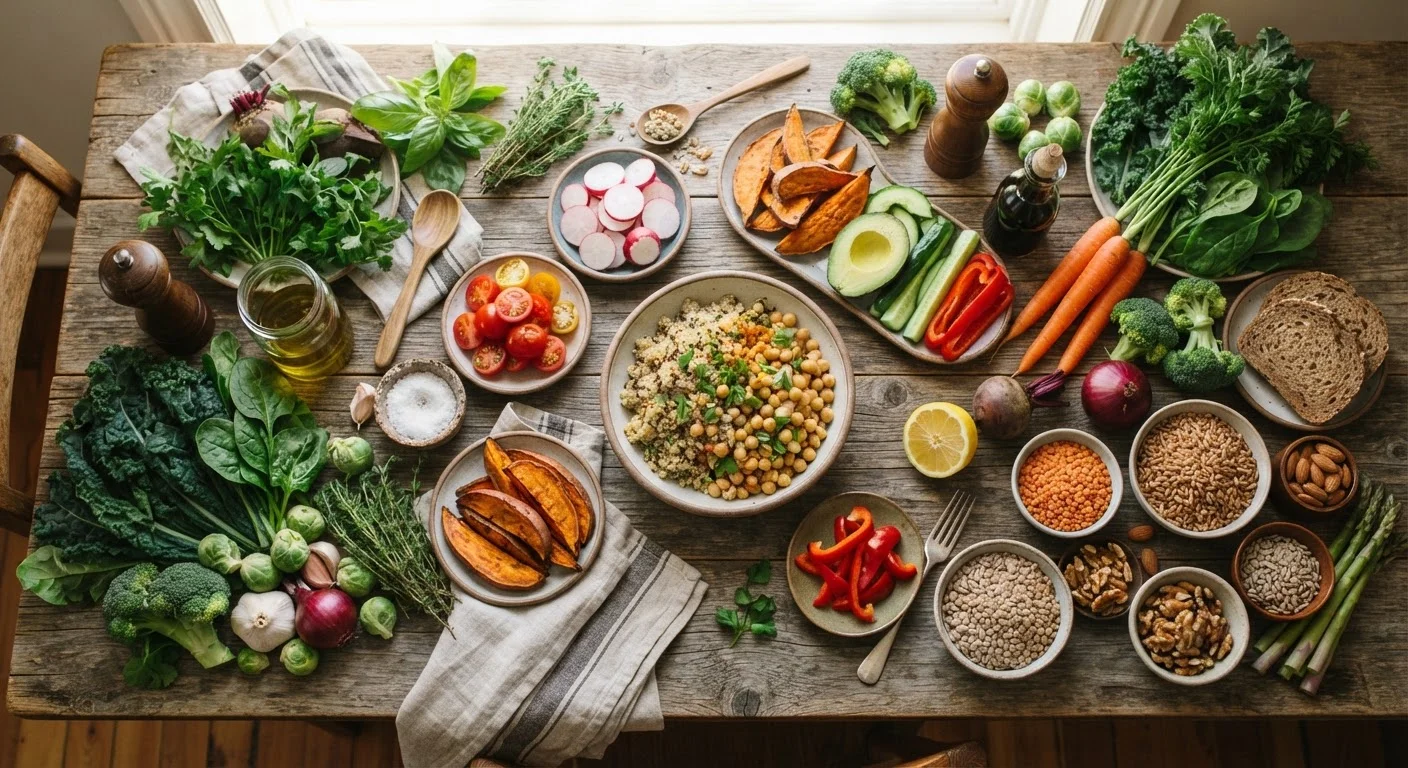
Across traditional food cultures — Mediterranean, Japanese, Indian, Ethiopian, Mexican — vegetables, legumes, and whole grains occupy the largest portion of daily meals. Meat, when present, often functions as a flavoring or occasional addition rather than the centerpiece. This isn't a coincidence. Diets built around diverse plant foods tend to deliver fiber, vitamins, and minerals in forms the body uses well. You don't need to eliminate animal foods; simply ask whether plants are genuinely taking up most of your plate.
Plants aren't a side dish in most traditional cultures — they are the meal.
Legumes appear with striking consistency
Lentils in South Asian dal, black beans in Latin American cooking, chickpeas across the Middle East and North Africa, soybeans in East Asian cuisines — legumes are arguably the most universal staple of long-standing food cultures. They're inexpensive, shelf-stable, high in plant protein, and rich in soluble fiber. Nutrition researchers studying populations with notably long healthy lifespans have consistently flagged legumes as a dietary common denominator. Canned or dried, they're one of the most accessible upgrades available to any kitchen.
Legumes may be the single most consistent staple across diverse healthy food traditions.
Meals are eaten slowly and with others
In many traditional food cultures, eating is embedded in social ritual rather than squeezed between tasks. Meals in Mediterranean countries, for example, are often longer, shared affairs. Japanese food culture includes the concept of hara hachi bu — eating until about 80% full — which reflects a broader cultural norm of mindful, unhurried eating. Research suggests that eating more slowly is associated with better satiety signaling, though individual factors vary. The practical takeaway: sitting down, removing screens, and sharing food with others costs nothing and aligns with patterns seen in traditionally healthy communities.
Slowing down and sharing meals is a low-cost habit present in many of the world's healthiest food cultures.
Variety is built in, not an afterthought
Traditional cuisines tend to rotate a wide range of vegetables, grains, and proteins across the week — partly for practical and seasonal reasons, partly because flavor and texture variety are culturally valued. Nutritionally, dietary variety matters because different whole foods deliver different combinations of micronutrients. A rotating roster of foods — rather than eating the same five meals on repeat — is more likely to cover nutritional gaps over time. You don't need to track every nutrient; simply aim to introduce one unfamiliar vegetable or grain each week.
Variety isn't a diet trick — it's a structural feature of virtually every long-lived food tradition.
Cooking at home is the norm, not the exception
Traditional food cultures, by definition, predate the convenience-food era. Home cooking — whether elaborate or simple — is the baseline assumption. Research consistently associates home-prepared meals with higher intake of vegetables, fiber, and whole ingredients compared with frequent away-from-home eating. This isn't about gourmet cooking; many traditional staples are quick to prepare. A pot of lentil soup, a grain bowl with roasted vegetables, or a stir-fry with whatever produce is on hand reflects how most of the world's traditional cuisines actually work day-to-day.
Home cooking is the silent foundation beneath nearly every traditional dietary pattern.
Fermented foods appear across many traditions
Yogurt in the Middle East and South Asia, kimchi in Korea, miso and natto in Japan, sauerkraut in Central Europe, kefir in Eastern Europe — fermented foods have been part of traditional diets for millennia, primarily for preservation. Researchers are actively studying the relationship between fermented foods, gut microbiome diversity, and broader health markers. While the science is still developing and no specific health claims should be drawn, the consistent presence of fermented foods across diverse healthy food cultures makes them worth including as part of a varied diet where culturally appropriate and well-tolerated.
Fermented foods have appeared in traditional diets across nearly every continent for centuries.
Bringing These Principles Into Your Own Kitchen
You don't need to adopt another culture's cuisine wholesale — and doing so without context can actually flatten the very richness these traditions carry. Instead, think of these shared principles as a framework you can apply to whatever you already cook and eat.
Apply One Principle at a Time
Trying to overhaul your entire diet at once often leads to frustration and backsliding. Instead, choose one principle from this list and apply it for two or three weeks before adding another. Small, consistent shifts tend to be more durable than dramatic short-term changes. Nutrition changes work best when they fit naturally into your existing routines and food preferences.
Start small: add one more vegetable to a dish you already make, or sit down without screens for one meal per day. These micro-shifts add up. And because many traditional food cultures are inherently budget-conscious — built around legumes, grains, and seasonal produce — eating this way doesn't have to be expensive. See our article on eating well on a budget without sacrificing nutrition for practical strategies.
It's also worth noting that modern nutrition myths sometimes push against these traditional patterns — warning against carbohydrates, for instance, when whole-grain staples appear in virtually every long-standing healthy food culture. Our piece on common healthy eating myths addresses several of these misconceptions directly.
This article is for informational purposes only and is not a substitute for professional medical or dietary advice. Always consult a qualified healthcare provider before making significant changes to your diet, especially if you have an existing health condition.