

Key Takeaways
Testosterone and Diet
Testosterone is the primary male sex hormone responsible for muscle mass, bone density, libido, and mood. Diet does not directly control testosterone levels, but certain nutrients play a supporting role in the body's ability to produce and regulate this hormone. Research has identified specific vitamins and minerals where deficiency is associated with lower testosterone.
Testosterone synthesis depends on enzymatic processes that require micronutrient cofactors. Addressing deficiencies may help restore levels toward a normal range, but supplementing beyond sufficiency shows limited benefit in most studies.
Why Nutrition Matters for Testosterone
Testosterone production is a complex biological process, but it does not happen in a vacuum. The body requires specific raw materials — vitamins, minerals, and dietary fats — to synthesize and regulate hormones effectively. When key nutrients are missing or severely depleted, testosterone levels can fall below the normal range.
This does not mean that eating a particular food will send hormone levels soaring. The relationship is more nuanced: nutritional deficiencies impair the system, and correcting them helps restore normal function. For most men eating a varied diet, dramatic hormonal swings from food choices are unlikely. But for those with specific gaps — which are more common than many realize — targeted nutrition changes can matter.
To understand how men's dietary needs relate more broadly to hormonal biology, see our article on why men's nutritional needs differ from women's.
~42%
U.S. men deficient in vitamin D
Data from the National Health and Nutrition Examination Survey (NHANES) indicates vitamin D deficiency affects a substantial proportion of American men.
~48%
Adults not meeting magnesium intake recommendations
NHANES data consistently shows that nearly half of U.S. adults consume less magnesium than recommended daily amounts.
~11%
Decline in testosterone per decade after age 30
Research published in peer-reviewed endocrinology literature estimates testosterone declines gradually with age, though individual variation is significant.
The Nutrients With the Strongest Evidence
Zinc
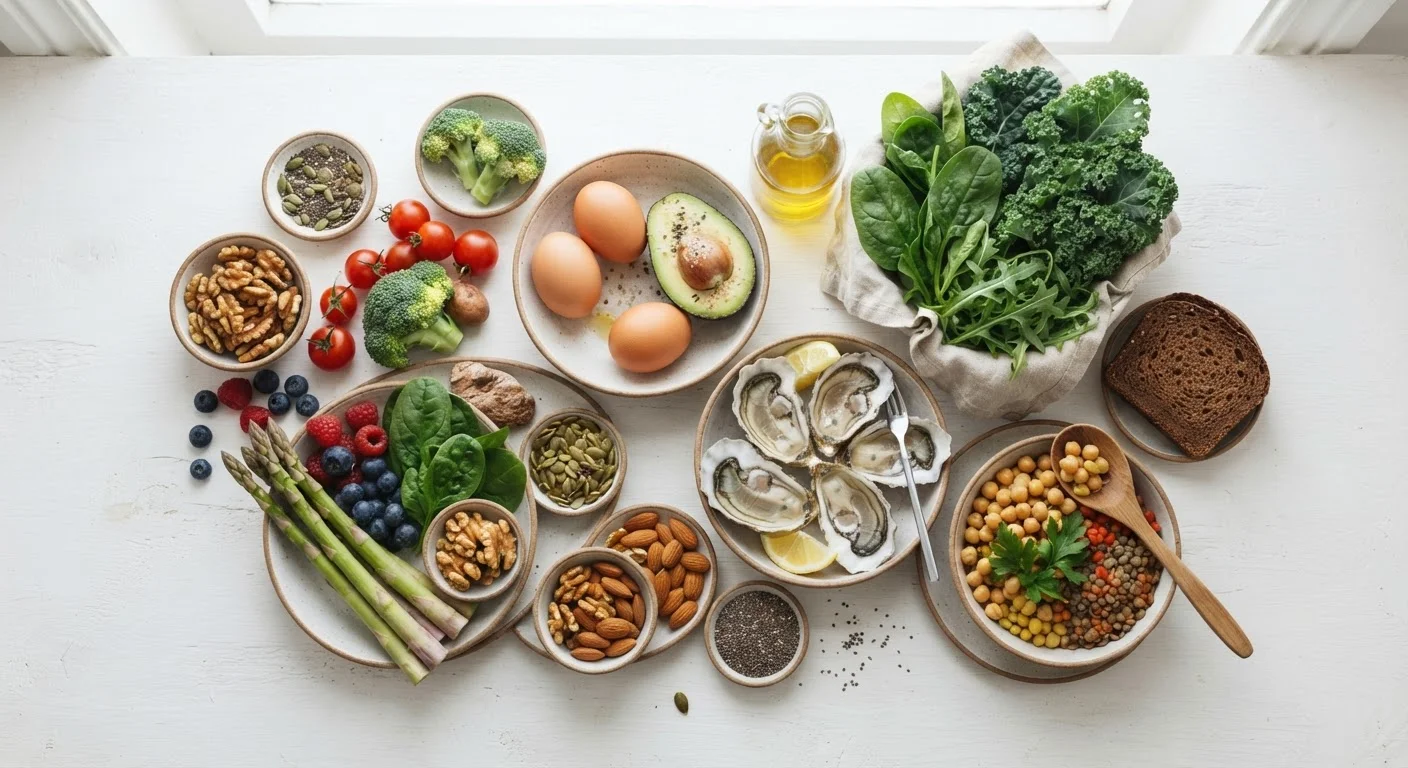
Zinc is arguably the most well-established micronutrient in testosterone research. It acts as a cofactor in enzymes involved in testosterone synthesis, and clinical studies consistently show that zinc deficiency is associated with reduced levels. Foods richest in zinc include oysters, beef, pumpkin seeds, and legumes.
Vitamin D
Vitamin D functions more like a hormone than a traditional vitamin, and receptors for it are found in testicular tissue. Observational studies link low vitamin D status to lower testosterone, and some intervention trials in deficient men show modest improvements with supplementation. Sunlight exposure, fatty fish, and fortified foods are primary sources.
Magnesium
Magnesium is involved in hundreds of enzymatic reactions and appears to influence the bioavailability of testosterone — particularly the amount that is 'free' and active in the body. Low magnesium intake is widespread among men. Leafy greens, nuts, seeds, and whole grains are reliable sources. See our overview of nutrients most men don't get enough of for context on how common these gaps are.
Focus on Correcting Deficiencies First
Before buying supplements, consider whether a blood test could reveal actual deficiencies in vitamin D, zinc, or magnesium. Correcting a confirmed deficiency through diet or supplementation under medical supervision is far more evidence-based than taking broad 'hormone support' products. Your doctor can order simple tests to check your nutritional status.
Dietary Fat: An Underappreciated Factor
Cholesterol is the molecular precursor to all steroid hormones, including testosterone. Diets that are extremely low in fat can restrict the raw material the body needs for hormone synthesis. Research suggests men following very low-fat diets may experience modestly lower testosterone compared to those eating adequate healthy fats.
This does not mean that eating more saturated fat is beneficial — the evidence does not support that conclusion. Instead, the focus should be on including quality unsaturated fats from sources like olive oil, avocados, nuts, and fatty fish. For a deeper look at the evidence on fat and men's health, our article on dietary fat and men's health covers the research clearly.
“Nutrition affects hormone function in men not through dramatic food-specific effects, but through the adequacy of key micronutrients that underpin the entire endocrine system. Deficiency is the real risk for most men.”
— Men's Health Editorial Team, Health and nutrition editorial collective
What the Evidence Does Not Support
It is important to be realistic about the limits of nutrition research in this area. Many studies are small, observational, or conducted in men who were already deficient — making it difficult to generalize findings to healthy men with adequate nutrient levels. No food or supplement has been shown to dramatically boost testosterone in men whose levels are already within a normal range.
Claims made by many commercial supplements are often exaggerated or based on thin evidence. Products marketed as 'testosterone boosters' vary widely in composition and are not regulated the same way as prescription medications. Some may contain nutrients like zinc or vitamin D that help if you are deficient, but the overall evidence base for proprietary blends is weak.
For a broader perspective on what testosterone actually does — and what is myth — see Testosterone and Men's Health: Separating Facts from Fitness Myths.
This article is for general informational purposes only and does not constitute medical advice. If you have concerns about your hormone levels or are considering dietary changes or supplementation, please consult a qualified healthcare professional.