

Why the Numbers Matter
Statistics don't tell the whole story of men's mental health — but they do reveal the scale of a challenge that often goes unacknowledged. For men who may be wondering whether their struggles are unusual, or for anyone who wants to understand the landscape, these figures provide important context.
This reference article compiles key prevalence figures, treatment gap data, and suicide statistics drawn from established public health sources. It is not a diagnostic tool and does not constitute medical advice. For a broader introduction to the topic, see Men's Mental Health: What It Actually Means and Why It Matters.
Prevalence and the Treatment Gap
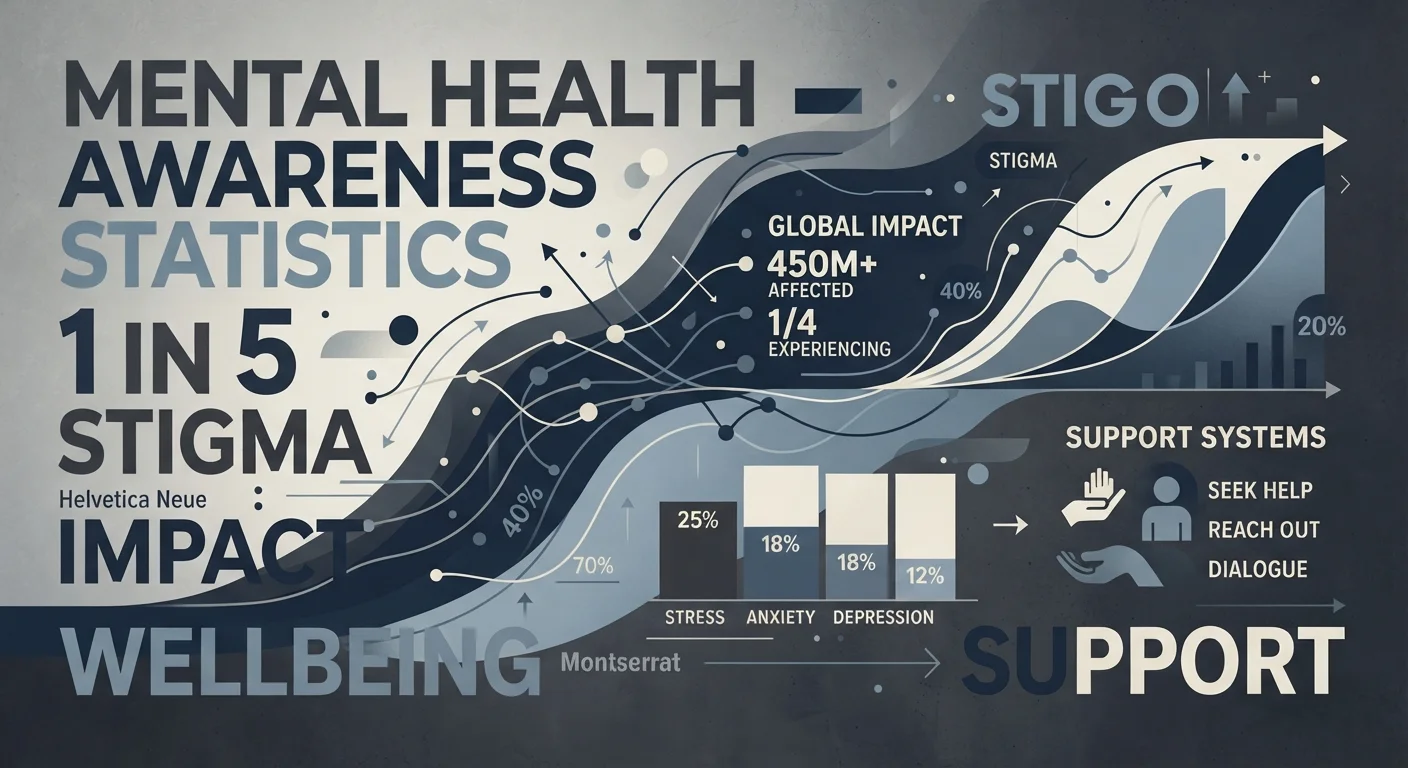
Mental health conditions affect men at significant rates, yet a large proportion never receive care. According to the Substance Abuse and Mental Health Services Administration (SAMHSA), roughly one in five adults in the United States experiences a mental illness in any given year — and men are consistently underrepresented in treatment settings relative to their burden of illness.
Research consistently shows men are less likely than women to seek professional help for depression, anxiety, or substance use disorders. Cultural norms around stoicism and self-reliance are widely cited as contributing factors, explored in depth in The Silence Epidemic, and the specific obstacles men face are outlined in Barriers That Stop Men Seeking Mental Health Support.
Depression is one of the most commonly underdiagnosed conditions in men. Partly this is because it often presents differently — irritability, anger, and withdrawal rather than overt sadness. Depression in Men Doesn't Always Look Like Sadness explains these atypical presentations in detail.
Suicide: Understanding the Data
Suicide statistics represent one of the starkest indicators of the men's mental health crisis. According to the Centers for Disease Control and Prevention (CDC), men die by suicide at approximately four times the rate of women in the United States. Suicide is among the leading causes of death for men under 45.
Public health researchers note a phenomenon sometimes called the "gender paradox" of suicide: women report higher rates of suicidal ideation and attempts, while men have significantly higher mortality from suicide. Factors including method lethality and lower rates of help-seeking are commonly cited in this context.
If You or Someone You Know Is in Crisis
If you are experiencing suicidal thoughts or a mental health emergency, contact a crisis service immediately. In the United States, you can call or text 988 to reach the Suicide and Crisis Lifeline. These services are confidential and available around the clock. Do not wait to seek help.
These figures underline why addressing the treatment gap and reducing stigma are genuine public health priorities — not simply individual concerns.
Key Definitions and Terms
Understanding the language used in mental health data helps readers interpret statistics accurately. Below are definitions of terms that appear frequently in public health reporting on men's mental health.
Prevalence
The proportion of a population that has a particular condition at a given time. Prevalence data help estimate how widespread a health issue is.
Treatment gap
The difference between the number of people who have a mental health condition and those who actually receive appropriate care. A large treatment gap indicates many people are going without help.
Suicidal ideation
Thoughts about ending one's own life, ranging from passing considerations to detailed planning. It is a clinical term used in research and mental health assessment.
Gender paradox of suicide
A documented pattern in which women report higher rates of suicidal thoughts and attempts, while men have significantly higher rates of death by suicide — largely attributed to differences in method and help-seeking behavior.
Comorbidity
The co-occurrence of two or more health conditions in the same person at the same time — for example, depression alongside alcohol use disorder.
Mental illness
A broad term for health conditions that affect mood, thinking, and behavior. Examples include depression, anxiety disorders, and bipolar disorder. Diagnosis requires professional assessment.
Unaddressed mental health conditions carry documented physical consequences as well. The Hidden Toll: How Unaddressed Mental Health Affects Men's Physical Health covers the links between chronic stress, depression, and physical outcomes. For a structured way to reflect on your own wellbeing, the Mental Wellbeing Self-Check for Men is a practical starting point — not a diagnostic tool, but a useful prompt for self-awareness.
This article is for general informational and educational purposes only and does not constitute medical advice. If you or someone you know is experiencing a mental health crisis, please contact a qualified healthcare professional or a crisis helpline immediately.