

Key Takeaways
What Peptic Ulcers Actually Are
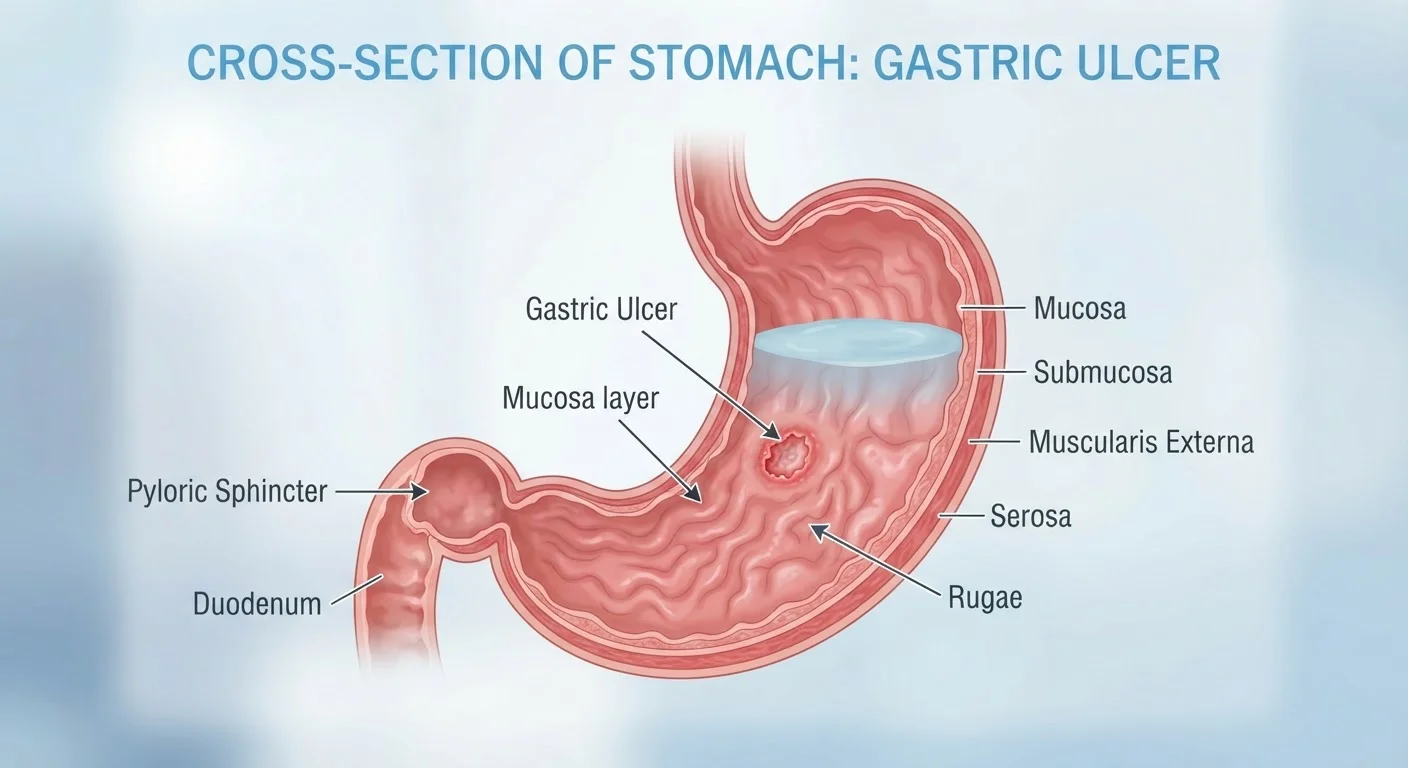
A peptic ulcer is an open sore that develops on the inner lining of the stomach or the upper portion of the small intestine, known as the duodenum. The lining normally produces a layer of protective mucus that shields it from the stomach's digestive acid. When that barrier breaks down, acid can erode the underlying tissue, creating an ulcer.
Peptic ulcers are common - the NIDDK estimates that millions of Americans are affected. The good news is that with accurate diagnosis, most ulcers respond well to treatment. Understanding the real causes is the critical first step toward getting the right care.
Myth
Stress causes peptic ulcers. Most people assume a stressful life is the main reason ulcers develop.
Fact
The primary cause of most peptic ulcers is infection with the bacterium Helicobacter pylori (H. pylori), not psychological stress.
For much of the 20th century, stress and spicy food were widely blamed for peptic ulcers. That understanding changed dramatically in the 1980s when Australian researchers Barry Marshall and Robin Warren identified H. pylori as the actual culprit - work that eventually earned them the Nobel Prize in Physiology or Medicine. According to the NIH, H. pylori bacteria weaken the protective mucus lining of the stomach and small intestine, allowing stomach acid to damage the tissue underneath. While chronic stress can influence digestive comfort, it is not a direct cause of ulcer formation in otherwise healthy individuals.
Myth
Spicy food and acidic drinks are what create ulcers in the first place.
Fact
Spicy or acidic foods can aggravate existing ulcer symptoms, but they do not cause ulcers to form.
The stomach is designed to handle acid - it produces its own. The real problem occurs when the protective lining is compromised. H. pylori infection and prolonged use of nonsteroidal anti-inflammatory drugs (NSAIDs) such as ibuprofen or aspirin are the two established primary causes. Once an ulcer is already present, spicy or highly acidic foods may increase discomfort, but eliminating them from your diet will not heal an existing ulcer or prevent a new one from forming if the underlying cause is not treated.
Myth
Only older adults or people with high-stress jobs get peptic ulcers.
Fact
Peptic ulcers can develop in any adult, and risk is tied to H. pylori exposure and medication use - not age or occupation.
H. pylori infection is very common worldwide, and transmission often occurs in childhood through contaminated food or water. NSAIDs are among the most widely used medications globally, taken by people of many ages for pain and inflammation. Although ulcers are more commonly diagnosed in middle-aged and older adults, anyone who carries H. pylori or regularly uses NSAIDs is at risk. Smoking and heavy alcohol use are also recognized contributing factors, according to the CDC and clinical gastroenterology guidelines.
Myth
If you have an ulcer, you will always feel severe pain - you'll definitely know something is wrong.
Fact
Many peptic ulcers produce mild or no symptoms, making them easy to overlook until a complication occurs.
Some people with peptic ulcers experience only a dull, burning sensation between the navel and breastbone, often when the stomach is empty. Others have no noticeable pain at all. Symptoms such as bloating, nausea, feeling full quickly, or mild indigestion are sometimes mistakenly attributed to other causes. Because complications like internal bleeding can develop silently, a healthcare provider should evaluate any persistent or unexplained digestive discomfort - particularly if you use NSAIDs regularly or have been diagnosed with H. pylori in the past.
Myth
Drinking milk soothes and heals peptic ulcers.
Fact
Milk provides only brief, temporary relief and may actually stimulate more acid production over time.
The belief that milk coats and heals ulcers was common for decades and was even part of standard medical advice at one point. Research has since shown that while milk's fat and protein content can temporarily buffer stomach acid and ease discomfort, it also triggers additional acid secretion once digested. This rebound effect can worsen symptoms rather than help them. Effective ulcer treatment today involves addressing the root cause - eradicating H. pylori with antibiotics or discontinuing NSAIDs - under the guidance of a physician.
The Real Risk Factors You Should Know
Two factors account for the vast majority of peptic ulcers: H. pylori bacterial infection and regular NSAID use. H. pylori is estimated to be present in roughly half the world's population, though not everyone who carries the bacteria develops an ulcer. NSAIDs, including over-the-counter pain relievers like ibuprofen and naproxen, reduce the stomach's ability to produce its protective mucus layer with frequent use.
~90%
Of duodenal ulcers linked to H. pylori
According to the National Institute of Diabetes and Digestive and Kidney Diseases, H. pylori infection is associated with approximately 90% of duodenal ulcers and up to 80% of gastric ulcers.
1 in 10
Americans develop a peptic ulcer in their lifetime
The American College of Gastroenterology estimates that about 10% of the U.S. population will experience a peptic ulcer at some point during their life.
Additional factors that can raise risk or worsen an existing ulcer include cigarette smoking, heavy alcohol consumption, and - in rare cases - a condition called Zollinger-Ellison syndrome, which causes the stomach to produce excess acid. If you use NSAIDs regularly for arthritis or another chronic pain condition, discuss the risk with your doctor. There may be safer alternatives or protective medications that can be prescribed alongside them. You can also learn how daily habits influence your overall health, including digestive well-being.
Seek Immediate Care for These Symptoms
Vomiting blood, passing black or tarry stools, or experiencing sudden, severe abdominal pain are signs of a potentially serious ulcer complication. These symptoms require emergency medical attention - do not wait to see if they improve on their own.
Recognizing Symptoms and When to See a Doctor
The most common symptom is a burning or gnawing pain in the upper abdomen, often occurring when the stomach is empty - between meals or in the early morning hours. Eating or taking antacids may temporarily relieve it. Other symptoms can include nausea, bloating, a feeling of fullness after eating small amounts, and dark or bloody stools.
If your symptoms are persistent, recurrent, or interfere with daily life, schedule an appointment with a healthcare provider. Diagnosis typically involves a breath test, stool test, or blood test to detect H. pylori, and in some cases an endoscopy. Effective, well-established treatments exist, and most people recover fully when the underlying cause is properly addressed. It is also worth understanding that chronic stress affects the body in distinct ways - but those effects are separate from the biological mechanisms behind ulcer formation.
This article is for general informational and educational purposes only and is not a substitute for professional medical advice, diagnosis, or treatment. Always consult a qualified healthcare provider with any questions you may have regarding a medical condition.