

Key Takeaways
Coeliac Disease
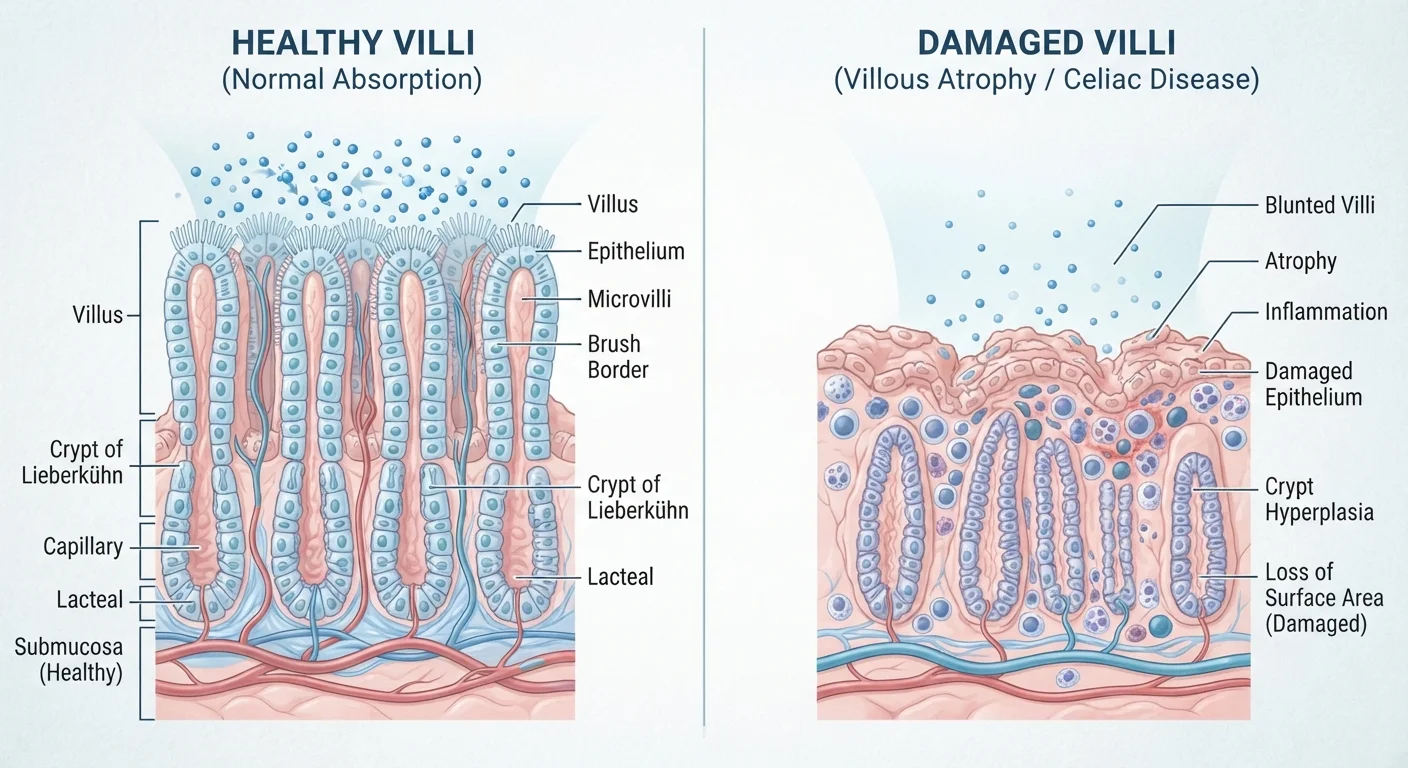
Coeliac disease is a chronic autoimmune condition in which the immune system mistakenly attacks the lining of the small intestine when gluten - a protein found in wheat, barley, and rye - is consumed. This immune reaction gradually damages tiny finger-like projections called villi that line the gut, reducing the body's ability to absorb nutrients properly. It is not an allergy or a food preference; it is a lifelong medical condition that requires ongoing management.
Coeliac disease is strongly associated with specific genetic markers (HLA-DQ2 and HLA-DQ8) and is confirmed through serological antibody testing and small intestinal biopsy, per established clinical guidelines.
What Actually Happens in the Body
When a person with coeliac disease eats gluten, their immune system treats it as a threat. Antibodies are produced, triggering inflammation that targets the lining of the small intestine. Over time, this repeated immune response flattens the villi - microscopic projections responsible for absorbing vitamins, minerals, and other nutrients into the bloodstream.
The result is malabsorption: the body cannot efficiently take in iron, calcium, folate, and fat-soluble vitamins even when a person eats a balanced diet. This distinguishes coeliac disease sharply from a simple food sensitivity. The damage is structural, measurable, and ongoing as long as gluten is consumed.
Recognizing the Symptoms - Which Are Often Surprising
Many people assume coeliac disease always causes obvious digestive distress, but symptoms are far more variable. Classic gastrointestinal signs include chronic diarrhea, bloating, abdominal pain, and unintentional weight loss. However, a significant number of people experience what clinicians call non-classical or silent presentations.
- Fatigue and brain fog - often linked to iron-deficiency anemia from poor absorption
- Bone pain or low bone density - caused by calcium and vitamin D malabsorption
- Skin rash (dermatitis herpetiformis) - an itchy, blistering rash directly caused by the same immune response
- Mouth ulcers and dental enamel defects
- Infertility or recurrent miscarriage in some individuals
- Peripheral neuropathy - tingling or numbness in the hands and feet
Because this spectrum is broad, coeliac disease is frequently misdiagnosed as irritable bowel syndrome, anemia of unknown cause, or chronic fatigue. If you recognize persistent symptoms like these, speak with a healthcare provider rather than modifying your diet independently.
Getting Diagnosed: Why Testing Matters
Diagnosis requires medical evaluation - it cannot be confirmed by how you feel on a gluten-free diet. The process typically involves:
- Blood tests: Providers measure specific antibodies, primarily tissue transglutaminase IgA (tTG-IgA). Total IgA levels are also checked because IgA deficiency can cause false-negative results.
- Endoscopy with biopsy: If blood tests are abnormal, a gastroenterologist examines the small intestine and takes tissue samples to confirm villous atrophy (flattening of the villi).
A critical point: you must continue eating gluten before and throughout testing. Eliminating gluten before testing can normalize antibody levels and intestinal appearance, making diagnosis impossible. Anyone suspecting coeliac disease should consult a physician before changing their diet.
Managing Coeliac Disease for the Long Term
The only established treatment for coeliac disease is a strict, permanent gluten-free diet - meaning all sources of wheat, barley, and rye must be eliminated, including hidden sources in sauces, condiments, medications, and processed foods. Even small amounts of cross-contamination can trigger intestinal damage in sensitive individuals, even without noticeable symptoms.
With consistent adherence, most people experience significant improvement. The intestinal lining can heal, nutritional deficiencies resolve, and risk of long-term complications decreases substantially. A registered dietitian with expertise in coeliac disease can be an invaluable partner in navigating the gluten-free diet safely and nutritionally.
Ongoing medical follow-up typically includes periodic antibody testing to assess dietary adherence, monitoring for nutritional deficiencies, and bone density assessments where appropriate. Research into additional therapies - such as enzyme supplements and immunomodulatory drugs - is active, but none have yet been approved as replacements for a gluten-free diet.
This article provides general health information for educational purposes only. It is not a substitute for professional medical advice, diagnosis, or treatment. Always consult a qualified healthcare provider with questions about any medical condition.