

Key Takeaways
Muscle Hypertrophy via Recovery
Muscle growth - known as hypertrophy - does not occur while you exercise. Instead, exercise creates small-scale damage to muscle fibers, and your body rebuilds those fibers stronger during rest. Recovery is therefore the phase where actual physical adaptation takes place, not an optional add-on to training.
This repair process is driven primarily by satellite cells (muscle stem cells) and protein synthesis pathways, particularly the mTOR signaling cascade, which are upregulated after resistance training.
What Exercise Actually Does to Your Muscles
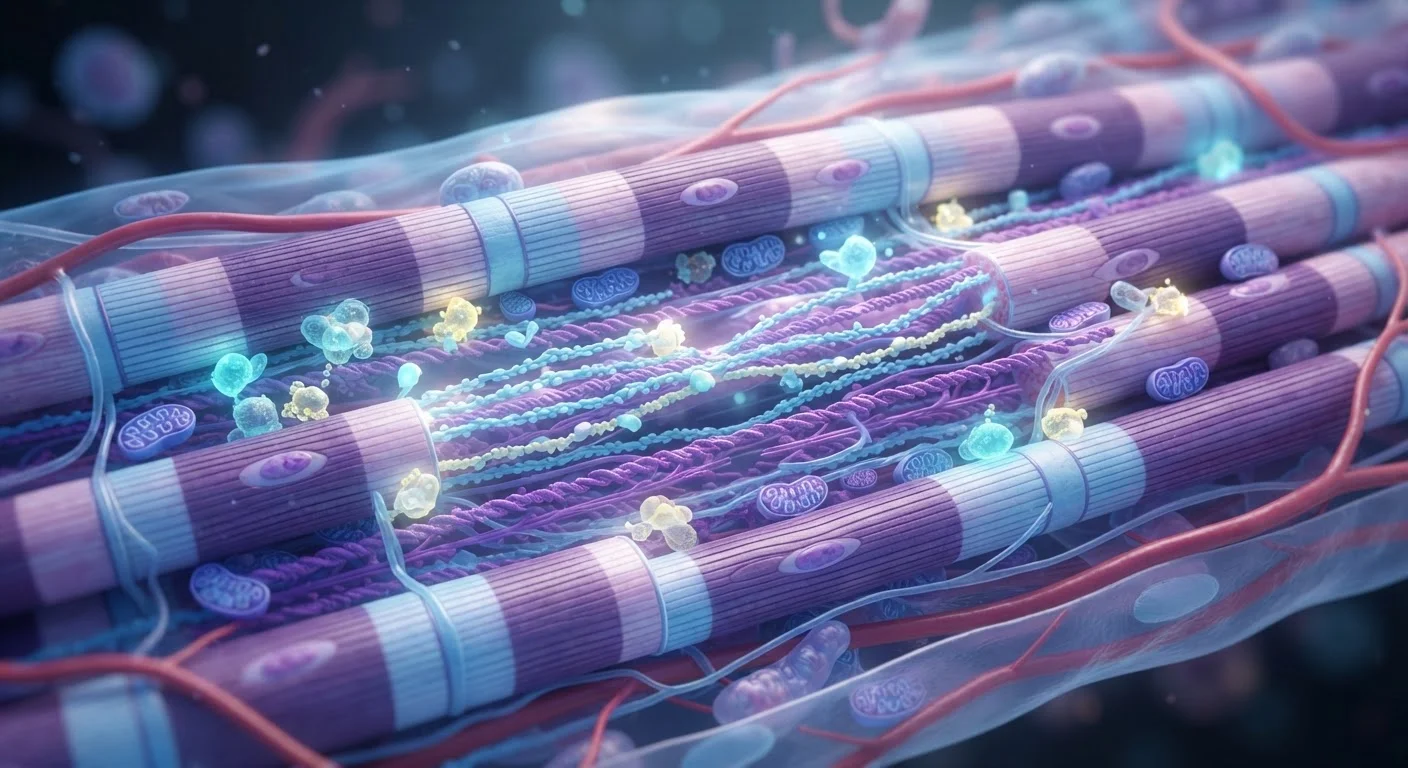
When you lift weights or do resistance-based exercise, you are not immediately building muscle - you are creating controlled stress on it. At a microscopic level, the tension and load placed on muscle fibers cause tiny tears called micro-tears or micro-damage in the muscle's structural proteins, particularly a filament called actin and another called myosin.
This damage is a normal and necessary part of the adaptation process. The body interprets it as a signal that those muscles need to be rebuilt to better handle that level of stress in the future. Without this stimulus, there is no trigger to adapt. But without the recovery window, there is no opportunity to actually improve.
This is why exercise and rest are not opposites - they are two halves of the same process. Rest days are a core part of training, even when it does not feel that way.
The Biology of Muscle Repair
After exercise, your body launches a coordinated repair response. Specialized cells called satellite cells - essentially muscle stem cells - are activated and migrate to the site of damage. They fuse with existing muscle fibers, donating new nuclei, which gives the fiber greater capacity to produce proteins and grow in size.
Simultaneously, a biological process called muscle protein synthesis (MPS) ramps up. This is your body assembling new structural proteins to reinforce and enlarge the damaged fibers. Research consistently shows MPS peaks in the hours following resistance exercise and can remain elevated for up to 48 hours, depending on training volume and individual factors.
48 hrs
Duration MPS stays elevated post-exercise
Research in exercise physiology suggests muscle protein synthesis can remain elevated for up to 48 hours following resistance training in trained individuals.
70%
Of daily growth hormone released during sleep
A substantial majority of daily growth hormone secretion occurs during slow-wave sleep, underscoring sleep's critical role in muscle repair and adaptation.
20-40%
Performance decline linked to overtraining
Studies examining overtraining syndrome have documented meaningful decreases in training performance when recovery is chronically insufficient over weeks of training.
This is why nutrition in the post-workout window matters significantly - dietary protein provides the amino acid building blocks required for MPS to proceed effectively. See our article on the role of nutrition in post-workout recovery for a deeper look at this process.
Why Sleep Is Your Most Powerful Recovery Tool
Of all the recovery strategies available, sleep has the strongest and most consistent support in exercise science. During deep (slow-wave) sleep, the pituitary gland releases a surge of human growth hormone (HGH) - a key regulator of tissue repair, protein synthesis, and fat metabolism. Disrupting sleep disrupts this hormonal process directly.
Beyond hormones, sleep reduces systemic inflammation, restores glycogen (the muscles' stored fuel), and supports the nervous system recovery that resistance and high-intensity training demand. Adults generally need seven to nine hours of sleep for optimal recovery, though individual needs vary.
Prioritize Sleep as a Training Variable
Treat sleep the same way you treat sets and reps - as a measurable, manageable component of your fitness program. Aim for a consistent sleep schedule with seven to nine hours per night. Even one or two nights of poor sleep can measurably reduce muscle recovery and next-day performance.
For a broader view of how rest affects every element of your fitness results, the complete overview of recovery for beginners is a helpful starting point.
What Happens When You Skip Recovery
Consistently training without adequate rest leads to a state known as overtraining syndrome - a condition where the body's repair capacity is outpaced by the stress placed on it. Rather than growing stronger, muscles remain in a chronically damaged state. Performance declines, soreness persists, energy drops, and injury risk rises.
This is one of the most common mistakes beginners make: equating more training with faster results. In reality, the adaptation - the actual improvement in strength and muscle size - only occurs when rest is prioritized. Common recovery myths, like the idea that rest equals laziness, often fuel this pattern.
If you want to go further, recovery strategies supported by exercise science outlines practical approaches grounded in research.
This article is for general informational and educational purposes only and does not constitute medical or fitness advice. Consult a qualified healthcare or exercise professional before beginning any new training or recovery program, especially if you have existing health conditions.