

Key Takeaways
Our Verdict
Cold water immersion and heat therapy are not interchangeable - they target different physiological mechanisms and suit different recovery windows. Cold is generally more evidence-supported for reducing short-term soreness after intense aerobic or competitive events, while heat works well for loosening stiff tissues and promoting relaxation. For most beginners, neither is essential; foundational recovery habits deliver more consistent benefit.
| Best for | Recommended |
|---|---|
| Reducing soreness after high-intensity aerobic or sport training | Cold Water Immersion |
| Easing chronic muscle stiffness or pre-workout warm-up | Heat Therapy |
| Maximizing long-term strength and hypertrophy adaptations | Neither - rely on sleep, nutrition, and progressive overload |
| Stress reduction and parasympathetic relaxation after moderate training | Heat Therapy |
What Each Therapy Actually Does to Your Body
Recovery tools only work if they match the physiological problem you are trying to solve. Before comparing the two, it helps to understand what each method triggers at a basic level. For a plain-language overview of recovery terminology, see our recovery glossary.
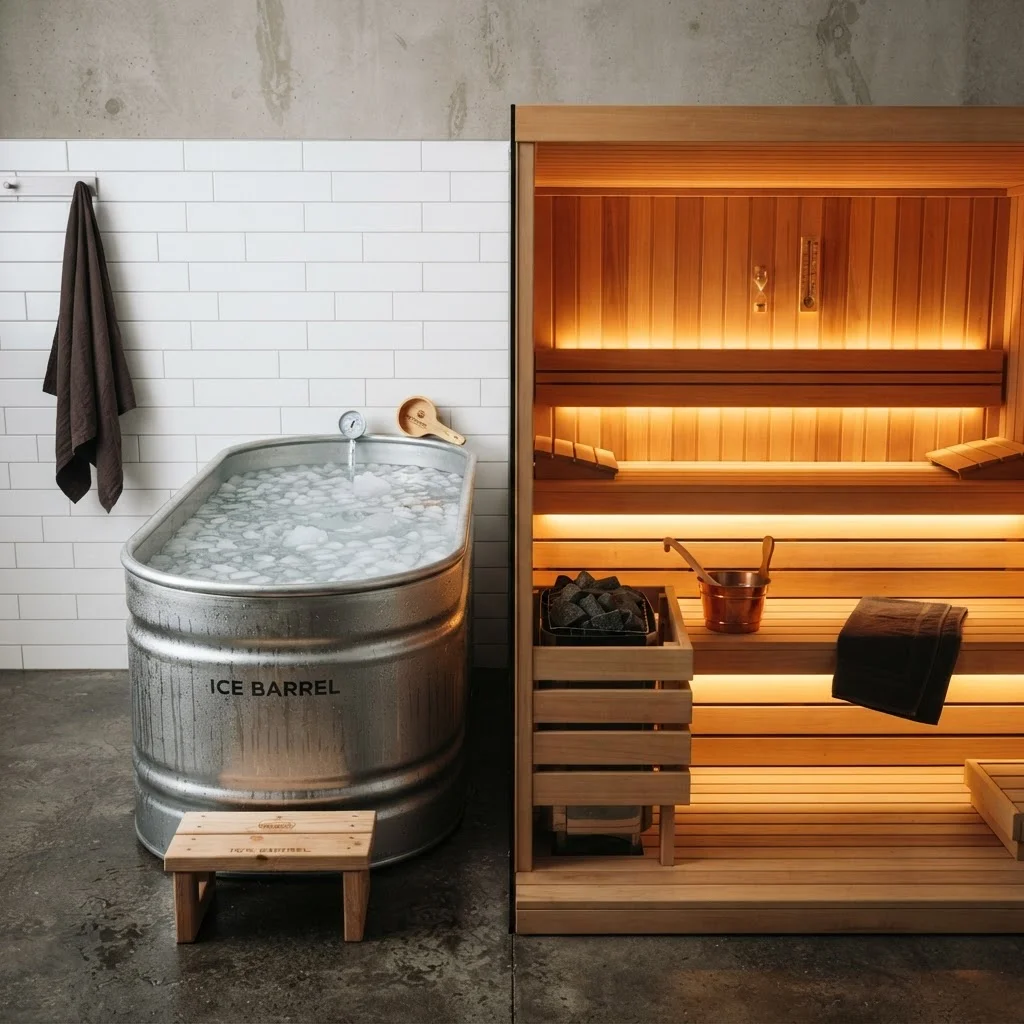
Cold water immersion (CWI) - typically water between 10°C and 15°C (50-59°F) - works primarily through vasoconstriction (narrowing of blood vessels) and a reduction in nerve conduction speed. Together, these effects reduce local swelling, metabolic waste accumulation, and the sensation of pain in worked muscles. The body also triggers a mild stress-hormone response, which some researchers believe contributes to a feeling of alertness post-immersion.
Heat therapy (hot baths, saunas, heating pads) works in the opposite direction: it causes vasodilation (widening of blood vessels), increases blood flow to soft tissues, raises tissue temperature, and promotes muscle relaxation. This makes heat particularly useful for loosening stiff joints and muscles before activity, or for promoting parasympathetic nervous system activity - the body's rest-and-digest state - after moderate training.
The Evidence on Soreness and Inflammation
Delayed-onset muscle soreness (DOMS) - the stiffness felt 24-72 hours after unfamiliar or intense exercise - is one of the most common reasons people reach for a recovery tool. Here the two modalities diverge clearly.
| Cold Water Immersion | Heat Therapy | |
|---|---|---|
| Primary mechanism | Vasoconstriction, reduced nerve conduction | Vasodilation, increased tissue perfusion |
| Best recovery window | Immediately post-exercise (acute soreness) | Pre-exercise or hours after training |
| Effect on DOMS | Moderate short-term reduction | Modest relief, mainly through relaxation |
| Impact on strength gains | May reduce hypertrophy if overused post-lifting | No significant negative adaptation signal |
| Accessibility | Cold shower, tub with ice | Hot bath, sauna, heating pad |
| Safety considerations | Hypothermia risk, cardiovascular stress | Overheating, dehydration, blood pressure changes |
A number of meta-analyses, including reviews published in sports medicine and exercise science journals, have found that cold water immersion produces a moderate, consistent reduction in perceived soreness compared to passive rest. The mechanism is partly mechanical (reduced swelling) and partly neurological (dulled pain signaling).
Heat therapy shows less robust evidence for treating post-exercise DOMS specifically. Its benefit is more reliable for chronic muscle tightness or as a preparatory tool before exercise - warming up connective tissue to improve flexibility and reduce injury risk during a session.
Cold Immersion May Limit Muscle Growth
Multiple studies - including work cited by the Journal of Physiology - suggest that routine cold water immersion immediately after resistance training can blunt the molecular signals responsible for muscle protein synthesis and hypertrophy. If building strength or muscle mass is your primary goal, consider reserving cold immersion for after aerobic sessions or competition days rather than after every lift.
Timing Matters: When to Use Each
Both modalities are sensitive to timing. Using them at the wrong point in your training cycle can reduce their benefit or, in the case of cold immersion, potentially work against your goals.
- After high-intensity aerobic or endurance training: CWI within 30 minutes can meaningfully reduce soreness and perceived fatigue, with no clear downside for endurance adaptation at moderate use.
- After heavy resistance training: Routine CWI immediately post-lift may dampen the inflammatory signals that drive muscle repair and growth. Reserve it for competition periods or when soreness management outweighs adaptation goals.
- Before exercise: Heat therapy is the appropriate choice here. Warmth improves tissue extensibility and joint range of motion, which supports safer movement mechanics.
- General relaxation and stress: A warm bath or sauna session activates parasympathetic recovery pathways, which can support sleep quality - itself the most evidence-backed recovery tool available.
Start Gradually With Either Modality
If you are new to cold immersion, begin with a cool shower (not ice water) for 60-90 seconds before progressing. For heat, a warm bath at a comfortable temperature is a safer starting point than a high-temperature sauna. Always hydrate beforehand and exit immediately if you feel dizzy or unwell. People with heart conditions, hypertension, or pregnancy should consult a doctor before using either therapy.
For a broader look at where these strategies fit in a complete recovery plan, see our science-supported recovery strategies overview.
Practical Guidance for Beginners
Neither cold water immersion nor heat therapy is a requirement for good recovery - they are supplemental tools, not foundations. As explored in our complete recovery overview for beginners, sleep, adequate protein intake, and gradual training progression deliver more consistent benefits than any passive modality.
That said, if you want to experiment:
- Start with contrast between a warm and a cooler (not ice-cold) shower rather than full immersion.
- Keep sessions short - 10 to 15 minutes is sufficient for either modality.
- Pay attention to how your body responds over several sessions; individual tolerance varies considerably.
- Do not replace active recovery strategies with either method. See our guide on active vs. complete rest for context on movement-based recovery.
~2°C
Typical skin temperature drop in cold immersion
Research published in sports medicine literature notes that immersion at 10-15°C for 10-15 minutes meaningfully lowers skin and superficial muscle temperature.
12-15 min
Common cold immersion protocol duration
Exercise science reviews suggest immersion sessions in this range are frequently studied and show the most consistent short-term soreness outcomes.
Finally, if you have encountered bold claims about ice baths or saunas online, our recovery myths article separates popular misconceptions from what the evidence actually supports.
This article is for informational and educational purposes only and does not constitute medical advice. Consult a qualified healthcare professional before beginning any new recovery practice, particularly if you have a cardiovascular condition, chronic illness, or are pregnant.